
Nov 17, 2023 | Uncategorized
Search engine marketing (SEM) has become one of the tools to help businesses to create a virtual platform and conquer bigger markets in these digital times. SEM includes several approaches and methods to ensure that the site is listed on the SERPs. In this article, we will take you through the various categories of search engine marketing to help you navigate within the SEM environment.
Search Engine Optimization (SEO)
Search engine marketing (SEM) begins with search engine optimisation (SEO). It is a process of improving your website’s content for higher ranking in non-paid search engines. Some essential parts contain keyword research, page optimisation, backlink generation, and the production of compelling content. SEO is a crucial factor for the long-term sustainability of online success, which can improve the visibility of a website slowly in the long run.
Pay-Per-Click (PPC) Advertising
Paid-per-click advertising is a model where advertiser companies place bids over keywords or phrases that would display their ads to be the first in search engine results. Such advertisements are marked either as “sponsored” or “ad”, and they are placed above or below the authentic search results. The advertiser only pays for PPC campaigns when the user clicks on the ad.
Display Advertising
Another form of SEM that involves placing visual ads on websites, social media and other forms of digital platforms is known as display advertising. The ads target specific audience groups according to their interests, demographics and online actions. A good display advertising strategy will ensure that you create brand awareness and capture consumer attention with visual images.
Social Media Advertising
Social media campaigning, such as Instagram, Facebook, Twitter, and LinkedIn, is closely related to search engine marketing. This will enable businesses to make customised ads and advertorials to reach the specified group of people. Social media advertising can accompany other SEM efforts, particularly in terms of maintaining brand loyalty.
Video Advertising
Since video content is on the rise, video advertising is now an important component of SEM. Advertisers pay for this form of advertising depending on views, clicks, or impressions. One can use video advertising, which can deliver a more powerful message to users and attract them more actively.
Shopping Ads
Shopping ads are crucial for e-commerce-based SE. These ads portray product images, prices, and store details straight to the search results page. For example, Google Shopping enables businesses to link their online stores to their product listings, making shopping easier for consumers.
Local SEO and Advertising
It is important for brick-and-mortar businesses, particularly those seeking to attract local clients. Optimising the site for local SEO involves ensuring that it appears in area search results and on maps. On the other hand, local advertising incorporates Google Ads’ local extension, where location details are made accessible in the advertisements, thereby assisting nearby customers in locating your business.
Conclusion
Search Engine Marketing is a fast-changing wonder in today’s business world, and any business has to understand its different constituents so as to remain in competition. Utilisation of these SEM techniques in combination can significantly increase the visibility of the business online and increase target traffic towards a specific audience for purposes of meeting the objectives of the marketing endeavour. A comprehensive SEM strategy that involves SEO for long-term growth or PPC for short-term gains can have a great effect in growing your online brand.
About Portalwiz Digital Marketing Services
At Portalwiz Technologies, we are your marketing and technology team, dedicated to helping businesses like yours thrive. With our strategic Search Engine Optimization services, we can help you reach a very wide audience and grow your business.
We also provide various services such as Digital Marketing, Social Media Marketing, Graphic Design, Content Development, Video Shooting and Editing and more.

Oct 18, 2023 | Uncategorized
Do you realise how important SEO is, “the secret sauce,” in improving online visibility and success? It’s like having a big banner that drives visitors to you and your site.
Let us begin with different types of SEOs in digital marketing and how to excel at each one. So, at the end of this article, readers can understand On-Page, Off-Page, Technical, and Local Search Engine Optimization for Business Owners and Managers and how their website can increase your organisation’s visibility and ranking through SEO. Dive in to read more about it
What is SEO?
SEO is the practice of optimising your website to appear higher in search engine results pages (SERPs). When your website ranks at the top of these search results, it is more likely to receive organic traffic, leading to higher engagement, conversions, and business growth.
Different Types of SEO Techniques
On-Page SEO: On-page SEO involves improving individual web pages for better search engine ranking. These key elements include keyword investigation, meta tags, headings, as well as content quality.
Off-Page SEO: SEO in the off-page involves all activities that are done away from your site to increase its online influence and trustworthiness, such as backlink building, social media marketing, and reaching out to influencers.
Technical SEO: Technical SEO focuses on technical aspects of your website, helping search engines find you and rank you higher in SERPs. This entails making sites quickly responsive on mobile and Schema Markup.
Local SEO: Increasingly, local SEO is a necessity for a “bricks and mortar” trade to attract shoppers within the radius. It enhances your online visibility in local searches through use of tools like Google My Business and local keywords.
Voice Search SEO: Voice search optimisation has become important with voice-activated devices on the rise. By this, is meant using natural language responses with targeted and simple answers.
E-commerce SEO: E-commerce SEO is important for online retailers. The process includes optimising product pages, improving user experience, and eliminating repetitive content-related problems.
Video SEO: Video content is booming. When it comes to video SEO, you optimise your videos for YouTube. These include titles of keywords, descriptive keywords, and tags.
Getting Started with SEO
Keyword Research: Research your target market for relevant keywords.
On-Page Optimization: Effectively employ selected keywords in your content, headline, meta-tags, and image descriptions. SEO on page is important for our Google ranking.
Quality Content: SEO blog writing can improve visibility on Google ranking. So write interesting, captivating, unique material worth reading to others.
Backlink Building: Improve credibility by growing good quality backlinks originating from established sources.
Regular Updates: Keep informed on new SEO trends and update strategies following algorithm amendments.
SEO Tools: Use SEO Strategic tools such as Google Analytics, Google.com/webmasters, and other keyword research tools.
For SEO services, you can contact Portalwiz Technology. They provide the best SEO service in Pune.
Wrapping Up
SEO represents an extensive technique which can profoundly impact your presence on the web. Running a blog, an e-Commerce Store or Local Business? Understanding and Applying the Right Type of SEO will allow you to Rank Higher, Attract More Visitors and Achieve Your Online Goals. Keep in mind as you explore further into SEO, it is a continuous process that needs regular updates and tweaking.

Oct 18, 2023 | IT Solutions, Uncategorized
Web security has grown crucial in a time when companies seriously rely on their online presence to engage with customers and promote growth. Maintaining trust, reputation, and client loyalty requires you to protect your company’s and your customers’ data online. This is more than just an issue of observation. We’ll examine the main aspects of web security in this post and offer practical advice for protecting your digital assets.
The Stakes Are High
It is now a requirement that customers’ private information is managed with the greatest care and respect. Inadequate web security check can lead to:
Financial Loss: The financial implications may prove expensive, including lawsuits and regulatory fines.
Loss of Trust: Trust, once deteriorated, is difficult to bring back. This is dangerous because if customers perceive your website as insecure, they can take business elsewhere.
Reputation Damage: This could include news of a data breach damaging the image of your brand. It might take you years to recover the reputation and brand image that you have built.
Understanding Web Security
Web security involves implementing various measures to protect your business and customers from online threats, including:
SSL Encryption: SSL, or Secure Sockets Layer, encrypts data that travels between your site and visitors, keeping personal information such as login information and credit card details private.
Regular Updates: It is crucial to regularly update your website’s software, plugins and applications. Cybercriminals exploit a vulnerability that develops as developers release patches.
Strong Authentication: Use multi-factor authentication (MFA) as an extra level of security for user accounts. This helps prevent unauthorised access.
Firewalls and Intrusion Detection Systems: These tools work as gatekeepers, intercepting the network traffic and preventing possible insecurity.
Security Training: To minimise the human factor, educate your team on security best practices that prevent a typical doorway for cybercriminals.
Regular Backups: Always back up your website and data to ensure they are recoverable after an attack or data loss.
Actionable Steps for Web Security
Perform a Security Audit: For web security, check your security measures, pinpoint weaknesses, and devise a plan to remedy them.
SSL Certificates: Verify that your website is using HTTPS and that your SSL certificate is updated.
Patch and Update: Make sure to upgrade your website’s software, plugins and other applications on a regular basis.
MFA Implementation: Set up multiple-factor authentication in user accounts.
Monitoring and Alerts: Install instruments which are meant to monitor website traffic and send alarms when there are any breaches.
Employee Training: Educate your team on security, conducting security awareness training.
Incident Response Plan: Make an incident response plan that will lay down actions to be taken in the event of a breach, inform affected parties, and involve relevant organisations. We can increase our digital presence with advanced application web security solutions
Optimise your web security configurer adapter for added protection.
Popular Threats on Online Businesses and Ways to Handle Them.
Malware and Ransomware:
Prevention: Consider using antivirus and anti-malware software, continuously updating your operating system and software packages, and providing training programs for employees that teach them how to identify and stop malicious emails. Establish robust email security protocols and back up your data regularly.
Phishing Attacks:
Prevention: Train all the employees on how to spot phishing threats; install email filters that can identify all the phishing attempts aimed at entering the institution’s network; and the employees ought to be verified when it comes to verifying the sender of an email and valid the requests for sensitive
Data Breaches:
Prevention: Ensure encryption of sensitive data, limit the accessibility to those only relevant, monitor and log network activity, and consistently audit security policies and access controls.
Distributed Denial of Service (DDoS) Attacks:
Prevention: Implement DDoS mitigation services; have redundant server systems and a rapid incident response plan for recovery from attacks.
Insider Threats:
Prevention: Ensure strict access controls, closely monitor employees’ activities and background check for newly recruited employees. Encourage a culture of security awareness and educate workers on the implications of insider threats.
Zero-Day Vulnerabilities:
Prevention: Keep informed about security patches, use intrusion detection systems, and frequently update and patch your software and systems.
Password Attacks:
Prevention: Employ MFA for all accounts, create strong, unique passwords for each account, and educate employees about their role in password protection.
Man-in-the-Middle (MitM) Attacks:
Prevention: Secure the internet with the usage of HTTPS, tighten up secure network measures, and teach the staff about the risks of unsecured public Wi-Fi networks.
Social Engineering Attacks:
Prevention: Regularly train your employees to be aware of social engineering tactics. Develop policies that necessitate checks for critical demands. Stay protected online with the latest web security protocols.
Unpatched Software Vulnerabilities:
Prevention: Keep software regularly updated and patched, use a vulnerability management program to identify weaknesses and fix vulnerabilities, and institute intrusion detection systems.
Supply Chain Attacks:
Prevention: Screen potential third-party vendors and assess their security measures. Review and evaluate the security of your supply chain partners on a regular basis.
Web Application Attacks (e.g., SQL Injection, Cross-Site Scripting):
Prevention: Ensure that you have the right coding practices for securing web applications, use web application firewalls, and conduct regular security audits and penetration testing.
IoT (Internet of Things) Vulnerabilities:
Prevention: Set default passwords on IoT, separate IoT networks from critical enterprise networks, and keep IoT devices and software up to date.
Inadequate Backups:
Prevention: Keep your data backed up to secure offline places and test your recovery and backup processes often.
Human Error:
Prevention: Some of the strategies that can be used include educating employees about security best practices, limiting access based on roles, using user training, and using simulated phishing tests to increase awareness.
Conclusion
Web security is not a one-time act; it is an ongoing commitment towards securing your business and customers’ data online. By adopting these measures and remaining watchful, it is possible to minimise the possibility of a data breach and protect your customers’ confidence. Keep in mind that the cost of preventing a data breach is only a fraction of the cost of an actual data breach, whether it is done in terms of money or reputation.

Oct 18, 2023 | Uncategorized
Hello there! Have you ever wondered why digital marketing is so important? Traditional marketing techniques are no longer enough to keep your company competitive and successful in the fast-paced digital environment we now live in. The development of the internet and digital technologies has changed how customers engage with brands and make decisions about what to buy. As a result, digital marketing has evolved into a vital resource for companies of all sizes. We’ll talk about the power of digital marketing in this post and how it may have a big impact on your company.
The Evolution of Marketing in the Digital age
From traditional marketing to digital marketing, how much have we travelled? The game has changed with the rise of the internet and all the cool technological advancements. The world is turning to internet platforms for information, advice, and even purchasing. To adapt, businesses must be where the customers are.
Enhanced Targeting and Reach
Here’s the thing: With digital marketing, we can be as accurate as a sniper! To begin with, we can reach out to specific demographics very precisely. We are now able to reach global audiences through tools such as search engines, social media, and email marketing. We are like throwing a big net just to catch the fish we want.
Cost-Effectiveness and Measurable Results
Digital is inexpensive compared to traditional marketing. Goodbye, wasted money on fancy print ads and expensive TV commercials! In fact, using all the available tools we have, we can track all the metrics related to the performance of our digital marketing campaigns. It is like having an intrinsic feedback loop that permits us to fine-tune our strategies in infinite ways.
Building Brand Awareness and Credibility
Picture this: an effective web presence and a potent brand image. Thus, Digital marketing works wonders for businesses! This leads to credibility and trustworthiness and helps in engaging customers through content marketing, social media engagement, and online reviews. It’s all about building a community and connecting on some level.
Engaging and Personalised Customer Experiences
Here’s the secret ingredient: making clients feel unique. We can provide great customer experiences through interactive and personalised digital marketing methods such as targeted email campaigns and personalised website experiences. It is about engaging with customers, creating relationships, and connecting on a personal level through social media channels. Because, just like with a good buddy, a little effort goes a long way.
Here are some examples of personalised digital marketing strategies:
Targeted Marketing:
With the help of digital marketing, you can target your ideal audience directly using data. With this data, you can develop personalised marketing messages and campaigns based on specific demographics, interests and behaviours. For example, you can execute FB Ads aiming at particular age groups, countries or cities, hobbies and online habits of the audience of your business.
Search Engine Optimisation (SEO):
SEO is a technique used to optimise the content of your website in order to rank better in search engine result pages targeting specific keywords. In essence, by customising your content to address the issues and questions of your target audience, you are essentially tailoring your website in line with the interest of prospects.
Email Marketing:
Email Marketing is a Personalised Digital Strategy. Your email list can be divided based on characteristics such as buy histories, engagement levels, and preferred customers. Afterwards, you can launch targeted emailing of each segment with custom recommendations about products, content, or offers that match their behaviour and preferences.
Content Personalisation:
It is centred on generating valuable and relevant messages to your audience. Different buyer personas call for different types of content in personalisation in marketing content. You can create separate posts for style-conscious millennials and budget-savvy parents, for instance, if you are a fashion retailer.
Remarketing/Retargeting:
Using remarketing or retargeting, your website can customise the ad experience for users who have already visited it or used your products. As for targeted ad campaigns, they show adverts to some consumers depending on their previous online conduct, including the products that they have previously browsed through and abandoned in their shopping carts.
Conclusion:
We’ve talked about how important digital marketing is in today’s corporate world. Digital marketing is critical in driving corporate success, from evolution and increased targeting to cost-effectiveness and brand exposure. Here’s some sound advice: embrace the potential of digital marketing, study the ins and outs, and seek expert help if necessary. With this fantastic instrument, let us shape the future of business together. So, let us set our sights high and unleash the power of digital marketing!
Continue your fantastic effort, and happy marketing!y
Oct 18, 2023 | Uncategorized
How we access information has undergone a remarkable transformation in the digital age. No longer are we tethered to desktop computers; instead, we navigate the web using an array of devices, from smartphones and tablets to laptops and desktops. In this dynamic landscape, responsive web design has emerged as a strategic imperative for businesses and website owners.
Beyond Aesthetics: A Strategic Shift
Responsive web design is not merely about making websites look good on different devices; it’s a strategic shift that acknowledges the diverse ways users engage with online content. It’s a recognition that user experiences should be seamless and optimised, regardless of the screen size or device used.
Adapting Seamlessly
The essence of responsive design lies in its ability to adapt seamlessly to any device. Whether your audience is viewing your website on a smartphone during their morning commute, a tablet at a coffee shop, or a desktop in the office, a responsive website ensures that the user experience remains consistent and enjoyable.
Google’s Stamp of Approval
Responsive web design is not only about user convenience; it is also about strategic value in the digital world. Google, the world’s largest search engine, has recognised the importance of responsive design and has incorporated it into its search ranking algorithm. Google favours responsive websites in its search results, which is a crucial factor in online visibility.
The Benefits of Responsive Design
- Improved User Experience: A responsive website adapts to different screen sizes, offering users a consistent and user-friendly experience. No more pinching and zooming or frustrating navigation.
- Enhanced SEO: Google’s preference for responsive sites translates into better search engine rankings, potentially driving more organic traffic to your site.
- Cost-Effective: Maintaining a single responsive website is more cost-effective than managing multiple versions for different devices.
- Faster Loading Times: Responsive sites are optimised for performance, ensuring that pages load quickly, regardless of the device’s capabilities.
- Future-Proofing: Responsive design ensures that your website stays accessible and functioning as new devices and screen sizes emerge.
Embrace Responsive Design
Responsive web design is a strategic necessity in a world where digital presence is critical. It’s about meeting users where they are and making sure your message, product, or service is available to everyone. It’s a pledge to provide a consistent user experience and a nod to Google’s preference for responsive websites.
If you already embrace the potential of responsive web design and capitalise on its strategic advantage in the digital arena, Your users, as well as Google, will appreciate it.
Oct 18, 2023 | IT Solutions, Uncategorized
Hey there! The world of web development is always buzzing with new ideas and technologies. In 2023, some exciting trends are shaping how websites will look and work. Let’s dive into them and see what are the trends that are dominating the market today.
1. AI-driven Interfaces
Think of AI (Artificial Intelligence) as your web buddy. It’s getting smarter and will make websites more personal. You know those friendly chatbots? They’re powered by AI. In 2023, AI will help websites understand you better, show you stuff you like, and make your online experience smoother.
2. AR-VR Integration
AR (Augmented Reality) and VR (Virtual Reality) are like magic for the web. They used to be for games, but now they’re joining websites too. Imagine trying on clothes online or going on a virtual tour of a museum without leaving your house! That’s what AR and VR will bring to websites – lots of fun and learning.
3. Enhanced Web Accessibility Practices
Everybody should be able to use the web, no matter what. In 2023, websites will be even better at this. They will make sure that people with disabilities can use them easily. This means websites will be friendly to screen readers, work well with keyboards, and follow guidelines to be super inclusive.
4. Progressive Web Apps (PWAs) for Offline Functionality
PWAs are like webpages that work even when you’re not connected to the internet. They’re fast and act like apps you download, but you don’t need to install them. This is great for when you’re in a place with bad internet or no connection at all. In 2023, you’ll see more of these PWAs around.
5. Bold Typography and Minimalist Designs
Websites will look different in 2023. They will be clean and simple, like a tidy room. Big, bold letters will catch your eye, and there won’t be too much stuff on the screen. This makes websites look nice and makes it easy for you to find what you’re looking for.
6. Heightened Emphasis on Cybersecurity
Cybersecurity is like a shield that protects websites from bad guys on the internet. In 2023, web developers will use stronger shields. They will make sure your data is safe and sound. You’ll see more locks and security measures to keep your information away from trouble.
So, there you have it! In 2023, websites will be more personal, fun, easy to use, work even when you’re offline, look neat and tidy, and keep your information safe. It’s an exciting time for the web, and we can’t wait to see these trends in action!
Oct 18, 2023 | Uncategorized
The battle between organic and paid traffic sources rages on in the ever-evolving digital landscape. Businesses and website owners find themselves at a crossroads, determining which strategy will best boost their online presence and drive conversions. Should you invest in paid advertising, or is mastering search engine optimisation (SEO) the key to long-term success?
Let’s plunge into this epic battle to learn the true benefits of understanding SEO and why it might just be the superhero your website requires.
The Cost Factor: SEO’s Thrifty Advantage
Paid advertising has the potential to deplete your marketing budget faster than you can say “click.” While it can produce instant effects, it comes at a high price. You pay money for each click on your paid ad, making it an ongoing financial commitment. SEO, on the other hand, is a long-term investment when done correctly. It may take some time to reach the search engine ranks, but once there, the traffic is basically free. Say goodbye to expensive advertisements and hello to long-term growth.
Trust and Credibility: SEO’s Reputation Builder
When customers seek something online, they prefer organic search results over paid adverts. This trust is based on the belief that search engines such as Google give preference to the most relevant and trustworthy content. You’re not just climbing the rankings when you optimise your website for SEO; you’re also gaining trust and credibility with your audience. It’s similar to receiving a gold star from digital authority figures.
The Long Game: SEO’s Sustainable Success
Paid advertising provides instant delight, but its effects are fleeting. When you stop paying for adverts, the traffic stops. In contrast, SEO is a long-term strategy. It may take time and effort, but the rewards are usually long-lasting. Once you’ve secured the top spot in the search results, you’ll be able to reap the rewards without having to constantly open your wallet.
Targeted Traffic: SEO’s Precision Strike
Paid advertising can be a shotgun approach, casting a wide net in the hope of catching a few fish. SEO, however, is like a precision-guided missile. By optimising for specific keywords and phrases, you can attract the exact audience that’s most likely to convert. It’s not just about traffic; it’s about the right kind of traffic.
The Winning Combo: Synergy between SEO and Paid Advertising
While SEO and paid advertising have their unique strengths, the real magic happens when you combine them. Use paid advertising to get immediate results and visibility while working on your SEO strategy for long-term success. It’s the perfect one-two punch to dominate the online arena.
To summarise, the conflict between organic and sponsored traffic sources isn’t about one prevailing over the other. It is all about identifying their capabilities and strategically utilising them. SEO provides long-term development, trust, and precise targeting, making it a digital powerhouse. So, before you empty your pockets on expensive ads, consider harnessing the mighty force of SEO. It is the superhero your website needs to rise above the competition.
Oct 18, 2023 | Uncategorized
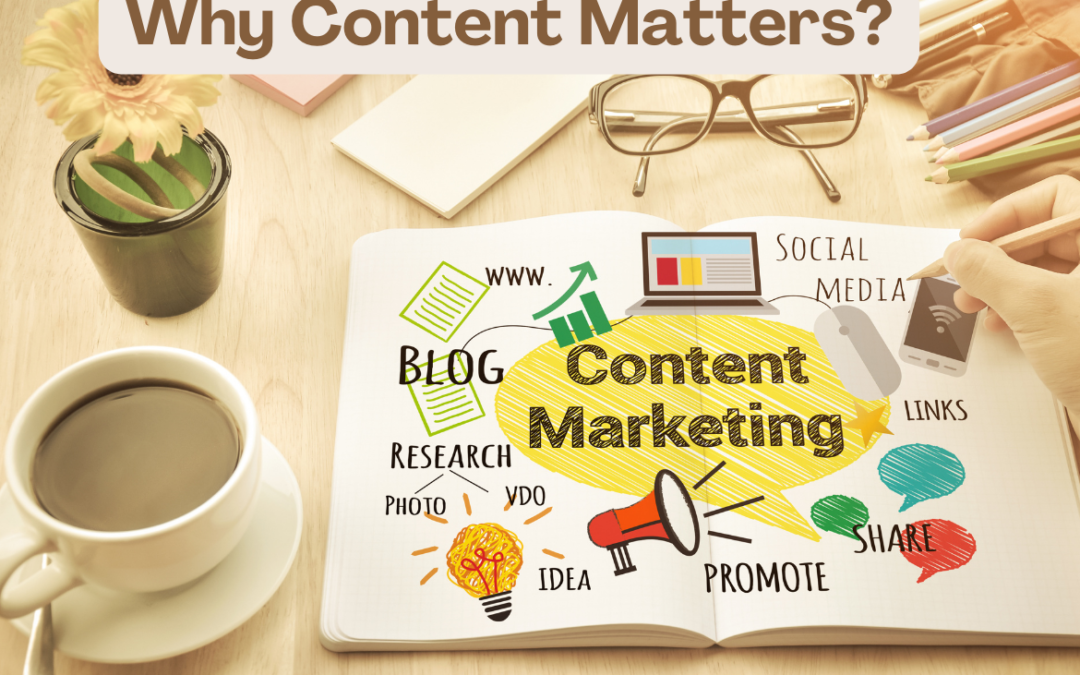
Hey there, fellow marketers! Prepared to immerse yourself in the captivating realm of content marketing? Dive in with us as we explore the crucial aspect of content and how it can lead to marketing success. In today’s digital age, grasping the power of content is paramount for all, whether newbies or seasoned pros. Let’s delve into the mysteries of successful content marketing together!
The Power of Content in Marketing
Let’s start by acknowledging the undeniable truth: At the core of effective marketing lies content. Not simply raising brand familiarity but also fostering credibility within your target demographic’s eyes. By presenting content with care and attention to detail, you can highlight your knowledge, build trust between you and your customers, and create a lasting bond.
Think about it. Can you recall the last occasion on which you purchased without conducting any research first? It’s likely that a long time ago… The importance of content lies in its capacity to educate, guide, and ratify our decisions. Your audience will remember your work with lasting impressions if you consistently create captivating, valuable material.
Prime Benefits of Engaging Content Strategies
Content marketing has the muscle to fuel business expansion. So, let’s take a closer look at some of its key benefits:
Initially, content marketing attracts leads and optimises their conversion. Consistently offering valuable resources and information can draw in customers who are actively seeking answers. Consistent content nurturing transforms leads into loyal patrons who continuously seek more.
But it doesn’t stop there! High-quality content is crucial for optimising your website’s performance on search engines (SEO). Keyword-rich content complemented by informative data boosts search engine visibility and increases the likelihood of being found naturally. Increasing organic traffic translates into greater chances to interact with your desired demographic.
Social media might not go unnoticed. Helping to heighten your brand’s influence on social media, content acts as the energy source for marketing efforts. Consistently producing captivating content, including compelling blog posts, visually striking images, and easily shareable social media updates, will help create enthusiasm for your brand and encourage organic conversations among your audience.
In addition, content marketing allows for a meaningful bond between businesses and clients. Continuously offering value strengthens the bond between customers and your brand, thus increasing customer retention and repeated purchases. In essence, content is the driving force behind customer satisfaction.
Strategies for Successful Content Marketing
Now that we’ve highlighted why content matters, let’s dive into some actionable tips to help you leverage its power effectively:
1. Conduct thorough audience research: Critical to crafting meaningful content is knowing your audience by mining data on demographics, tastes, and sensitivities to craft customised communication with precision.
2. Develop a content strategy: Ensure your content is tailored to meet the needs of your target audience and marketing aims. Compile a comprehensive plan encompassing your content’s underlying themes, formats, and dissemination means. Achieving consistency and impact maximisation hinges on this strategy.
3. Craft compelling headlines and introductions: Initially, grabbing your audience’s attention is fundamental. Create compelling headlines and introductions that captivate readers and encourage them to read on.
4. Incorporate storytelling techniques: People love stories! Infuse your writing with compelling stories, firsthand accounts, and concrete illustrations. By doing this, your content becomes relatable, memorable, and emotionally resonant.
5. Use visual elements: Aesthetics shouldn’t be an afterthought when it comes to content creation. To amplify your message, incorporate visual elements like pictures, graphs, and videos.
6. Optimize for search engines: Keyword optimisation is essential; integrate them into your content smoothly. Focus on optimised on-page elements like meta tags, headers, and alt text to boost visibility in search engines.
7. Promote, promote, promote: At this point, the real test begins: Can your content stand the test of time? Leverage social media, email marketing, and other distribution avenues to broaden your impact and guarantee your content garners the desired audience.
Conclusion
Equipped with the wisdom of content marketing, now is the time to put it into practice. The value of content lies in its ability to shape the narrative around a brand, prompting customer loyalty and prosperity. Publish engaging, impactful content that resonates with your audience, driving remarkable marketing achievements. Happy content marketing!
Oct 18, 2023 | IT Solutions, Uncategorized
Are you a business looking to skyrocket your success in the digital realm? Let’s talk about something that’s as essential as your morning coffee in today’s digital scenario: a rock-solid online presence. Whether you’re a startup hustler ready to conquer the world or a seasoned company looking to stretch your digital wings, the real deal lies in having a web app that’s not just good but freakishly awesome. And guess what? You’ve got a secret weapon in your tech arsenal – Portalwiz Technologies! Yes, we are all about whipping up web app magic that’s not only modern and scalable but won’t drain your piggy bank either. Let’s dive in!
Say Hello to Portalwiz Technologies
Meet the wizards of the web at Portalwiz Technologies. We are not just any ol’ web app development company; we’re your partner in turning your wild ideas into digital reality. We’ve got a troop of tech geniuses – developers, designers, and tech aficionados – who are all on a mission to create web apps that’ll make your eyes sparkle.
The Web Wonders We Weave
1. Custom Enchantments: Web App Development
Every business has its unique flavour, right? Portalwiz gets that. We’re all about crafting tailor-made solutions that fit your business like a custom-made suit. Be it a swanky e-commerce platform, a wizardly content management system, or a crystal-clear data analytics dashboard – Portalwiz knows how to make your dreams come true.
2. Responsive Spells: Mobile-Responsive Design
In a world where our smartphones are practically an extension of our hands, having a web app that plays nice with mobile devices is not just a cherry on top; it’s the whole cake. Portalwiz works its magic to ensure your web app dances gracefully on desktops and does the samba on smartphones and tablets. It’s all about giving users an experience that’s as smooth as butter.
3. Scaling Enchantment: Scalability at Its Finest
Scaling up your web app shouldn’t be scarier than facing a dragon. Portalwiz gets that too. We cook up robust architecture and sprinkle tech pixie dust to make sure your web app can handle the crowd without breaking a sweat. So, when your user base decides to throw a digital party, your app will be the life of it!
4. User-Focused Design that Pops
Ever stumbled upon a web app that’s more confusing than reading tea leaves? Portalwiz is all about turning the tables on that. We’re like the fairy godmother of user-centric design. We whip up interfaces that are as intuitive as your favorite spellbook. Your users won’t just stay; they’ll want to bring their friends along too!
5. Budget-Conscious Enchanter: Savings without Sacrifice
Don’t worry about emptying your vault at Gringotts to get a top-notch web app. We get that finances matter. We offer solutions that won’t make your galleons disappear into thin air. Startups and small businesses, this is your golden ticket to making a splash in the digital realm without emptying all your business budget on this.
The Final Scroll
In this era of digital wizardry, top-notch web apps are like a phoenix feather in your cap. And Portalwiz Technologies? We’re the Marauder’s Map to guide you through the mysterious castle of web development. We’ve got the spells, the expertise, and the flair to make your dream web app a reality. So, whether you’re craving modernity, scalability, or budget-friendliness, Portalwiz is your ticket to a digital adventure that’s nothing short of legendary.

Oct 18, 2023 | Uncategorized
Hey there, welcome to yet another blog that turns your business dreams into reality. Let me start by stating a fact: we all know that we are living in an era where attention spans are shorter than a cat’s nap, yes right? It’s a world where getting your message across is like navigating a maze of memes and viral videos. But worry not, because there’s a secret weapon that’s been silently shaping the way brands communicate: the art of graphic design. Yep, it’s the cool kid on the block, turning pixels and colours into your brand’s megaphone without even uttering a single syllable.
Now, let’s dive into the fascinating world of design and how it’s throwing a party for your brand’s message:
The Visual Jazz of Design
Ever heard of graphic design? It’s the Picasso of the marketing world, blending texts, images, and other eye-catching goodies to whip up a visual feast. Forget about just slapping things together on a canvas; this is more like a master artist crafting a symphony of colours, layouts, and typography vibes altogether. Think of your logo, website, or those snazzy marketing materials – they all tell a story that hits your audience right in the feels.
Snagging Attention
Hold up, have you seen how the world’s become a giant festival of information? Everyone’s competing for that blink-and-you-miss-it moment. That’s where the graphic design wizard steps in. A design that’s as bold as a double shot of espresso can snap those wandering eyes right back to you. Whether it’s a social media post that’s got swag, a website header that screams “Look at me!”, or a billboard that practically begs you to stop, graphic design’s the reason folks pause and explore what you’re all about.
Emotions on Display
Humans are all about the feels, and that goes double for decision-making. Here’s where graphic design flips the switch on emotions. Colours, images, and typography form a tag team that taps into those heartstrings. Imagine warm colours like red and orange sparking excitement, while cooler shades like blue and green bring in that trusty tranquillity. By tossing these design bits into your brand’s mix, you’re dishing out emotions tailor-made for your target audience.
Brand Swagger
Your brand’s more than just a logo—it’s an identity that needs a spotlight. Graphic design is your backstage pass to establishing and flaunting that identity. Keeping your design game consistent across every touchpoint—your website, social media hangouts, packaging, and ads—cooks up an experience folks can’t forget. Colours, fonts, and visuals, all in sync, etch your brand’s image into the minds of consumers, like a catchy jingle you can’t shake off.
Decode Complex Secrets
Ever had to explain rocket science to a toddler? Yeah, we get it, complex stuff can be, well, complex. Enter graphic design, your decoder ring. It takes those intricate messages and transforms them into visual magic. Think of infographics as your secret weapon—turning data and numbers into captivating visual tales. Simplifying things through design isn’t just smart, it’s like making that tricky crossword puzzle a breeze.
Crossing Cultural Crossroads
In our global village, where cultures collide and hashtags trend worldwide, graphic design plays diplomat. It’s all about understanding cultural vibes. From images to symbols to colours, every little design ingredient carries different flavours in different corners of the globe. Cracking the cultural code helps you make friends worldwide, ensuring your design doesn’t accidentally ruffle any international feathers.
Evolution of Digital Artistry
Hold the phone, ’cause the digital age is flipping design on its head. From responsive web jazz to interactive social media salsa, the digital playground is where design gets a futuristic makeover. Brace yourself for animations that’ll make your jaw drop, motion graphics that practically dance, and experiences that put you right in the story. It’s graphic design 2.0, and it’s rewriting the rules of engagement.
The Grand Finale
Drumroll, please—graphic design’s the silent storyteller in the branding theater. It’s the showstopper that whispers loudly, showcasing your brand’s essence, emotions, and values to anyone who lays eyes on it. A design that’s got its groove on can turn a random passerby into your most loyal fan. With technology zooming forward, graphic design’s role in shaping brand tales is only gonna shine brighter. So, if you’re thinking about cutting corners on design, think again. It’s not just about looking good; it’s about speaking the language of your brand, loud and clear.

Recent Comments