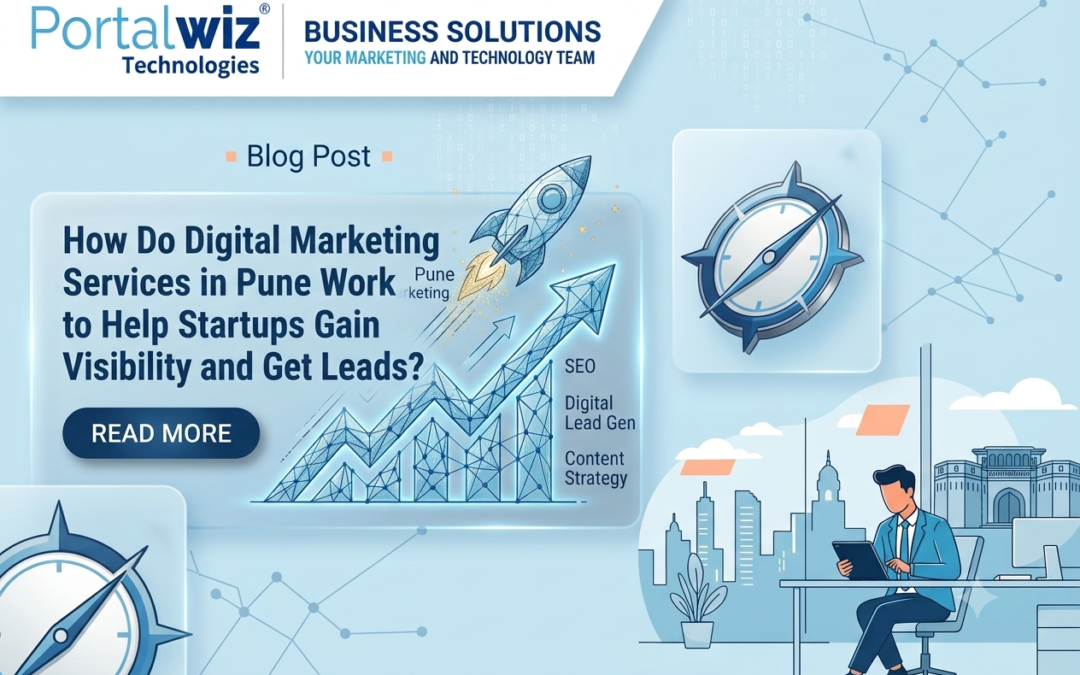
Digital marketing services in Pune help startups gain visibility and turn that visibility into real leads. For a young company with no prior business experience and a limited budget, finding the right digital marketing partner in Pune is key to success.
The Importance of Visibility in the First Place
The business might offer a fantastic product in its niche; however, no matter how great it is, nothing will happen unless anyone sees it. Visibility should come first because this is what lays the basis for other factors like trust and leads.
A good digital marketing company in Pune creates visibility through searches:
SEO, which ensures that the website ranks high in relevant searches
Social media marketing, which guarantees a consistent presence in social networks where the target audience is.
Content marketing, which allows positioning the startup as an authority in its niche.
Paid advertising that creates instant visibility while organic efforts grow in the background
Together, these channels make sure a startup shows up where its audience is looking, not just where the founders hope they’ll look.
Turning Visibility Into Leads: Just because a startup has visibility online doesn’t mean that it generates revenue, which makes digital marketing services focus on getting leads instead of visibility.
Campaign Target The Best Audience: Unlike traditional marketing efforts, which market to all and sundry, digital campaigns aim at particular demographics, geographics, geographic locations, interests, and behaviour.
Landing Pages Drive Conversions: The best campaign brings targeted traffic to the landing pages, which are made to prompt a single type of action – signing up for an email list, scheduling a call, or placing an order. Effective headlines and forms, along with clear calls-to-action, help users get to their goal without any trouble.
Email Marketing and Retargeting Keep Customers Interested: Not all visitors turn into leads on the first visit. Email marketing nurture sequences and retargeting ads drive them back by showing how valuable your business is.
Data Drives All Efforts: Digital marketing provides startups with real-time data, which allows determining the effectiveness of every channel and adjusting budget allocations.
Why This Is More Important For Startups Than Established Brand Names
As startups do not have many years of brand equity, every penny they spend should be worth it. Digital marketing services are a great option for startups that need to get ahead of the curve and compete with larger and well-established companies through clever and strategic use of the marketing budget.
Why Use Digital Marketing Services From a Local Agency In Pune
When using digital marketing services from a Pune-based digital marketing company, a startup gets an advantage that is impossible to get from a standard agency. A Pune-based digital marketing company is familiar with the business environment, activities of competitors, and customers in Pune and can develop a strategy of social media marketing and SEO that will focus on a hyperlocal target audience instead of a nationwide one.
Conclusion
The digital marketing solutions provided by the agency help the startups take an easy route from obscurity to being discovered, trusted, and selected by the right clientele. The use of visibility-building solutions such as SEO, content marketing, and social media marketing combined with lead generation strategies such as ads and landing pages enables the startups to generate leads continually without having to incur enterprise-level costs. Every startup that aims for sustainable growth should partner with the right digital marketing company in Pune.
FAQs
1. How can digital marketing services help startups in Pune?
Digital marketing services help startups in Pune build online visibility, reach their target audience, generate qualified leads, and establish brand credibility through SEO, content marketing, social media marketing, paid advertising, and conversion-focused landing pages.
2. Why should a startup hire a digital marketing company in Pune?
A digital marketing company in Pune can help startups understand the local market, identify relevant audiences, optimize their online presence, and develop SEO, social media, and lead-generation strategies suited to their growth goals and budget.
3. Which digital marketing strategies are most effective for startups?
SEO, content marketing, social media marketing, paid advertising, landing-page optimization, email marketing, and retargeting are effective strategies for startups. The right combination depends on the startup’s target audience, industry, budget, and growth objectives.
4. How does SEO help startups generate leads?
SEO helps startups appear in relevant search results when potential customers are actively looking for their products or services. By targeting relevant keywords and optimizing website content, startups can attract qualified organic traffic and convert visitors into leads.
5. How much does digital marketing cost for a startup in Pune?
Digital marketing costs for a startup in Pune depend on factors such as the services required, target audience, competition, advertising budget, and business goals. A digital marketing company can create a suitable strategy based on the startup’s priorities and available budget.
Content creation has become a pillar of success in the always changing terrain of digital marketing. Still, why is content so important, and how may it help a brand flourish? Let us explore its importance and learn how it could change your marketing plan.
What is Content Development in Marketing?
Researching, producing, editing, and disseminating worthwhile material specifically for a given audience is the process known as content development. Content development emphasizes teaching, entertainment, or problem-solving for your target audience unlike most conventional advertising, which often interrupts. In your field, this strategy helps establish authority, build relationships, and create trust.
Content development guarantees your brand stays current by providing answers to popular inquiries or solutions to particular consumer concerns. It also gives you a stage to regularly offer value, therefore enhancing the link between your brand and your audience.
Key Benefits of Content Development in Marketing
Enhanced Audience Engagement: Improving the visibility of your website on search engines depends on premium material. Including pertinent keywords and offering insightful analysis helps to guarantee that your brand shows higher on search results. This not only generates natural traffic but also helps you to build trust.
Content that satisfies user wants and provides efficient answers to questions appeals to search engines. Frequent revisions to your material can also help to preserve your rating, therefore keeping your company relevant and visible in a crowded market.
Improved SEO Performance: Regular, well-written material helps to communicate the voice, goal, and values of your company. In a saturated market, your story and demonstration of knowledge will help you stand out. A strong brand helps consumers to choose your goods or services by building confidence.
Every bit of material you produce supports the values of your brand, thereby strengthening your impression. Customers that find consistency in your messaging are more likely to grow to be advocates of your company and to show loyalty.
Stronger Brand Identity: Higher conversions usually follow from content that either instructs or provides entertainment value. Offering useful tools as eBooks, manuals, or webinars, companies can draw in possible clients and turn them into leads. Content serves as a magnet, attracting prospects actually eager for what you have to offer.
A content strategy emphasizing on guiding consumers through the buyer’s path helps lead nurturing to be simpler. Every stage—awareness, thought, and decision—can be supported with customized material that advances prospects toward a purchase.
Increased Lead Generation: Content creation offers a reasonably affordable and environmentally friendly approach to advertise your company. Evergreen material draws and interacts with your audience over time, unlike paid ads that stop working after the cash runs out.
It also lets you maximize your return on investment by repurposing and distributing current material via several outlets. Long term, this approach guarantees a constant presence without overspending.
Cost-Effective Marketing: Content development provides a sustainable, cost-efficient way to promote your business. Unlike paid ads, which stop delivering results once the budget runs out, evergreen content continues to attract and engage your audience over time.
It also allows you to repurpose and redistribute existing content across multiple channels, maximizing your return on investment. In the long run, this strategy ensures a consistent presence without overspending.
How to Get Started with Content Development
Understand Your Audience: Start by noting the hobbies, pain issues, and tastes of your target audience. Creating material that appeals to your audience requires knowing them. Social listening tools and audience research instruments will enable you to get insightful data. You will be more able to create material directly for your audience the more you know about them.
Choose the Right Formats: Choose the ideal content formats—blogs, videos, podcasts, or infographics—dependent on your audience and objectives. Different formats have different uses. Although blogs can offer in-depth knowledge, short videos or social media updates are ideal for drawing interest right away.
Create a Content Calendar: To guarantee consistency, ahead of time plan your material. A well-organized calendar keeps you in line with your marketing goals and helps you to be Key dates, subjects, and deadlines should all be on your calendar to guarantee a consistent flow of current, pertinent material. Being consistent helps you keep audience engagement over time.
Focus on Quality Over Quantity: Rather than producing a lot of work, spend time creating excellent, worthwhile material. One strong blog can have a more important influence than several mediocre ones taken together. Not only is quality material unique, but it also speaks to your audience for more length. It motivates returning visits and raises the possibility of shares, therefore optimizing the value of your efforts.
Measure and Optimize: Track your material’s performance with analytics tools. Based on the insights, hone your plan to get better outcomes. Track statistics including bounce rates, engagement, and conversions to find what works and what doesn’t. Constant optimization guarantees that your material stays relevant and successful for your objectives.
Conclusion
Modern marketing depends much on content generation since it increases audience involvement, strengthens brand identification, and stimulates company expansion. Your company can keep ahead in the cutthroat market by keeping a well-considered content strategy. Content production provides the means to reach your objectives—visibility, leads, or trust building included. Now is the ideal time to start if you have not yet given content production top priority. It is not only a need; success depends on it.
In this digital age, mobile apps are necessary for companies that want to connect with customers better and run their processes more smoothly. But how exactly can a mobile app help your company? Let’s look at the most important benefits of having a mobile app.
What is a Mobile App for Business?
A mobile app for business is a piece of software that works on phones and computers. When you use a browser to visit a website, mobile apps offer a more streamlined and personalized experience. Companies use mobile apps to stay in touch with their customers, improve services, and make their brand more visible.
Key Benefits of Mobile Apps for Your Business
Improved Customer Engagement: Mobile apps give companies a straight way to connect with customers. Businesses can stay in touch with and tell their customers through push notifications, personalized messages, and real-time updates. The customer is happier and more loyal to the brand because of this.
Increased Accessibility: Your business can be reached from anywhere and at any time with a mobile app. Customers can always use apps, whether they are looking at goods, buying something, or keeping track of an order. This 24/7 access makes things easier and encourages people to connect with your brand more often.
Better Customer Insights: Mobile apps gather useful information about how customers act, what they like, and how often they use something. You can use this data to make experiences more personal, make marketing strategies better, and make goods or services better. If you know more about your people, you can make smart choices that will help your business do better.
Streamlined Operations: Mobile apps can help automate tasks like customer service, managing orders, and keeping track of supplies. This cuts down on the need for human help, boosts efficiency, and lowers running costs. A mobile app can make running a business easier, so teams can work on more important chores.
Increased Revenue Opportunities: Mobile apps can make extra money by letting users buy things inside the app, subscribe to services, and get special deals. Businesses can directly sell goods through their app by adding e-commerce features. This increases sales and brings in more money.
How to Get Started with a Mobile App for Your Business
Define Your Objectives: Figure out your goals before you start making an app. Having clear goals will help guide the app development process, whether the goal is to get customers more involved, boost sales, or make operations run more smoothly.
Choose the Right Type of App: Choose whether you need an e-commerce app, a service app, or a customer reward app based on what your business needs.
Develop and Launch: Work with a trustworthy app creation team to make an app that works and is easy for people to use. Once the app is finished being built, you should promote it on your website, through email ads, and on social media.
Update Regularly: Regular changes with new features, bug fixes, and other improvements will keep your customers interested.
Conclusion
Mobile apps have many benefits for companies, such as making it easier to connect with customers and run operations more efficiently. A well-made mobile app can help your business stand out, get more people, and make more sales in today’s market. You should think about making a mobile app for your business if you haven’t already. It will give it the edge it needs to compete.
Businesses frequently struggle in today’s cutthroat market: Should they spend in long-term brand development or concentrate on marketing initiatives that yield quick results? Both are important, yet they have different functions and affect a business’s performance in different ways. This blog will discuss the distinctions between marketing and brand building, the importance of each, and how to strike a balance between the two for best results.
Understanding Marketing
The planned process of advertising goods or services to a specific audience is known as marketing. Attracting clients, creating leads, and increasing conversions are the main goals of marketing. It frequently emphasizes quantifiable results and immediate rewards. Marketing seeks to raise awareness and encourage particular activities, whether through digital advertisements, email campaigns, SEO, or content marketing.
Understanding Brand Building
The long-term goal of brand creation is to establish a distinctive personality that appeals to your target market. It all comes down to creating a brand, mission, and story that emotionally engages consumers. Establishing your identity, values, and desired market perception are all part of brand building. Your company’s beliefs, character, and reputation are just as important as its visual identity.
Key Differences Between Marketing and Brand Building
Usually campaign-driven and short-term, marketing aims to produce immediate outcomes and motivate particular behaviors. Conversely, brand building is an ongoing process aimed at establishing enduring recognition and loyalty. While brand creation is strategic and concentrates on consistent message and consumer interactions, marketing efforts are frequently tactical and involve direct promotions and advertising. While client loyalty and reputation are indicators of brand success, conversions and return on investment are indicators of marketing success.
How Marketing and Brand Building Work Together
Brand building and marketing go hand in hand to establish a powerful company presence; they are not mutually incompatible. A strong brand foundation increases the effect of your marketing initiatives, while successful marketing campaigns magnify your brand’s message. A well-known brand can increase marketing effectiveness because consumers are more inclined to interact with and trust a name they are familiar with.
Tips for Balancing Marketing and Brand Building
Having a clear plan is essential to striking a healthy balance between marketing and brand development. Create a brand guideline to ensure consistency, give priority to material that reflects your brand values, utilize data to guide your choices, and divide resources wisely between short-term marketing requirements and long-term brand building. Making sure that every marketing campaign upholds your brand identity is crucial.
Conclusion
Building a brand and marketing are both crucial elements of a successful business plan. While marketing produces results right away, brand building lays the groundwork for long-term success. Businesses can get both short-term success and long-term loyalty by comprehending the distinctions and striking the correct balance. Building a brand that not only attracts notice but also sticks in consumers’ thoughts requires investing in both.
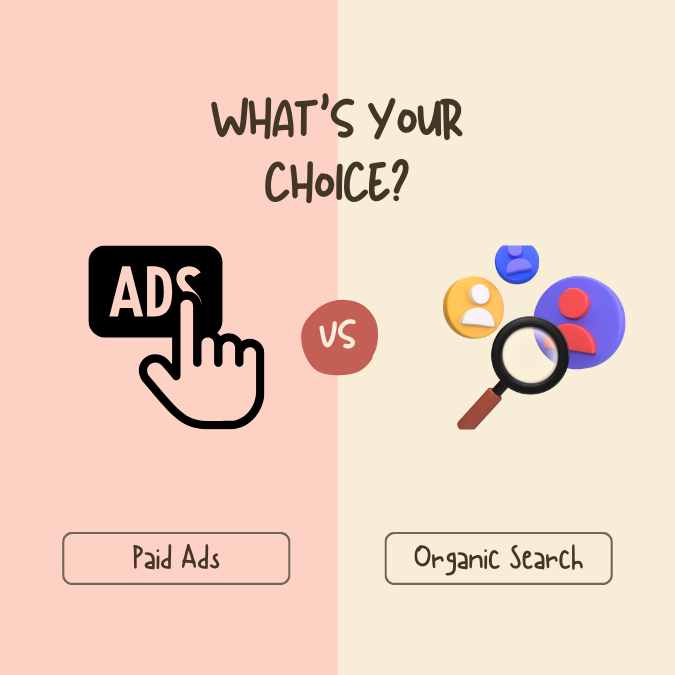
Businesses are always looking for new methods to expand their web presence and attract new clients in today’s digital environment. Paid advertisements and organic search are two of the most often used strategies for increasing website traffic. However, which one is best for your company? Let’s dissect both approaches so you can make an informed choice.
What Are Paid Ads?
Paid advertisements, sometimes referred to as Pay-Per-Click (PPC), entail purchasing advertisements to show up on websites, social media networks, and search engines. Usually, these advertisements are displayed to consumers according to their demographic information or search intent. Paid advertisements’ main benefit is that they provide immediate visibility and can increase website traffic right away.
How Do Paid Ads Work?
Here’s how Paid Ads generally function:
Set Up Campaigns: First, you decide which platform—such as Facebook Ads or Google Ads—you wish to use for your advertisements. After that, you choose your keywords, write your ad copy, and decide on your spending limit.
Bid on Keywords: Advertisers place bids on business-related keywords. The likelihood that their ad will show up in search results increases with the bid amount.
Ad Display: Your advertisement can show up at the top or bottom of search results or on social media feeds when users look for related terms.
Pay for Clicks: Because you only have to pay when someone clicks on your advertisement, it’s an affordable way to target particular demographics.
What Is Organic Search?
The method of increasing website traffic through organic search engine results without having to pay for placement is known as “organic search.” This tactic focuses on using SEO (Search Engine Optimization) approaches to optimize your website so that it ranks higher in search engine results.
How Does Organic Search Work?
Here’s the basic process of Organic Search:
Keyword Optimization: Researching and choosing pertinent keywords that your target audience is likely to look for is essential.
On-Page SEO: To make sure search engines can correctly crawl and index your website, you should optimize its content, meta tags, graphics, and structure.
Content Creation: Publishing excellent, educational content on a regular basis enhances the authority and relevancy of your website.
Backlinks: Getting backlinks from trustworthy websites raises the legitimacy of your website and raises its search engine ranking.
Patience Pays Off: Although it may take some time to see results, Organic Search offers long-term, sustainable advantages over Paid Ads.
Paid Ads vs Organic Search: Key Differences
Now, let’s compare Paid Ads and Organic Search to understand their strengths and weaknesses:
Factor
Paid Ads
Organic Search
Cost
Ongoing cost per click
Free, but time and effort are required
Speed
Instant visibility
Takes time to rank higher
Sustainability
Requires continuous funding
Sustainable over time once ranked
Traffic Quality
Highly targeted, but can be limited
Natural and consistent traffic
Control
Full control over ad copy and targeting
Limited control over ranking factors
When to Choose Paid Ads?
If you want to target a certain demographic, have a campaign in mind, or are seeking for speedy results, paid advertisements are perfect. Additionally, they are advantageous in highly competitive businesses where achieving organic rankings may take longer.
When to Choose Organic Search?
Organic Search is the best option if you want to focus on sustainable traffic, establish brand authority, and achieve long-term success. For companies hoping to build trust over time and draw in repeat business, it’s quite beneficial.
Conclusion
There are benefits and drawbacks to both organic search and paid advertisements. Organic Search offers long-term, economical traffic, while Paid Ads provide you control and results right away. Your objectives, timetable, and available resources will determine the best course of action for your company.

Recent Comments