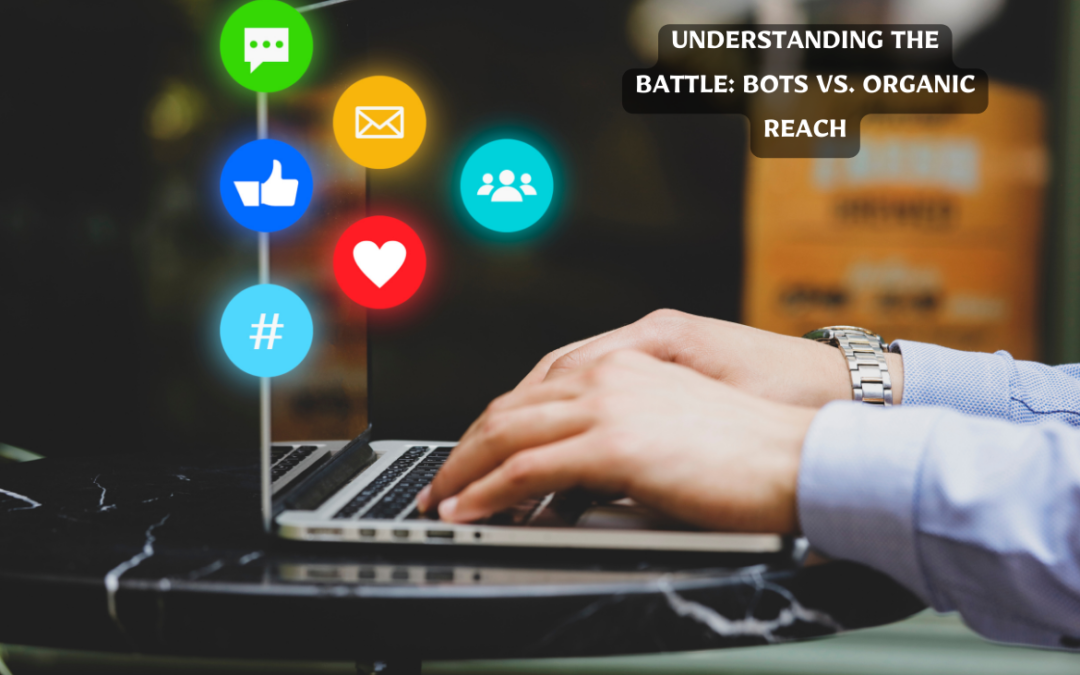
Social media platforms are the key marketing channels where the battle between bots and organic reach is obvious. Both bots and organic reach have significant roles in shaping online interactions. Businesses must understand the implications and nuances of each to navigate the digital landscape effectively.
Bots have become a major concern in the online world as they can manipulate metrics and deceive users. Bots can artificially increase engagement metrics like likes, comments, and shares, creating a false sense of popularity and influence. This can make measuring genuine interest and engagement challenging for businesses and individuals. Additionally, bots can deform algorithms and trending topics, amplifying some messages while suppressing others. As a result, bots can influence public perception and shape online conversations.
The Value of Organic Reach:
Organic reach on social media platforms is related to the natural and unpaid visibility of content. This means that the content is seen by real users, who engage with it genuinely, reflecting their authentic interest and association with a brand or content. Organic reach is crucial for building meaningful relationships with audiences, fostering trust and credibility, and driving long-term brand loyalty. In contrast, bots are not genuine users, and their engagement cannot be considered organic reach.
Challenges and Opportunities:
In the case of firms that want to enjoy the benefits of social media marketing, the complexities involved in dealing with bots are a real concern. Although bots may be the way to boost your follower count or suggest you got popular, this way will defeat the purpose of the exchange of real and organic interactions. By the way, the highlighted approach of organic reach calls for greater strategic and long-lasting audience-building efforts with the main focus on building bonds and the basis of value.
Strategies for Success:
In order to succeed in the digital world where bots are becoming increasingly common, businesses should prioritise authenticity, transparency, and engagement. This can be gained by making relevant content that connects with their target audience, fostering genuine interactions and conversations, and actively monitoring and addressing the impact of bots.
Conclusion:
Authenticity is key in the battle between bots and organic reach. While bots offer temporary shortcuts, they deteriorate trust and undermine online interactions. Businesses that prioritise genuine engagement build stronger relationships and drive long-term success. By understanding the nuances of bots vs. organic reach and adopting strategies that prioritise authenticity, businesses can manage the digital landscape with confidence and integrity.
CRM for Digital markekting is crucial. Marketers should consider using efficient customer relationship management systems to improve engagement and growth in the digital world. However, with so many options available, deciding which one to choose can take time and effort. To help you with your search, we have collected a list of the top 8 CRM platforms most suitable for digital marketers.
CRM for Digital Marketing
HubSpot: The company offers its customers a complete platform for inbound marketing, sales, and service. This platform includes easy-to-use tools that allow marketers to keep track of leads, handle their contacts database, and run email campaigns with ease. With the help of CRM utilities, customers can achieve a well-rounded product that meets their marketing requirements.
Salesforce: Salesforce is a well-known provider of CRM solutions, offering various add-ons like a marketing automation toolkit, lead management, and analysis suites. Salesforce’s advantage is its customizable platform, which allows advertisers to add the necessary features and expand their actions according to their business needs. Additionally, there is a wide range of apps available that can help advertisers enhance their marketing efforts.
Zoho CRM:A wise choice for startups and medium-sized businesses. Zoho CRM offers a big bouquet of powerful features, including lead scoring, email marketing, and social media integration. UI (User Interface) intuitiveness and its low price point are why this service is enjoyed by marketers concerned with productivity without necessarily having to spend more.
ActiveCampaign: ActiveCampaign is a powerful tool for marketers that can be coupled with marketing automation. With this combination, marketers can design custom campaigns that can drive leads and nurture them effectively. The tool’s advanced segmentation capability and streamlined workflows make it the preferred choice for businesses that handle bulk messaging that require a high level of targeting, like mine.
Infusionsoft by Keap: An all-in-one CRM and marketing automation solution, Infusionsoft by Keap is designed to contribute effectively to the success of small businesses and enterprises.
Marketers could utilize it through email marketing, e-commerce integration, or lead scoring. Just to mention a few, to help them streamline their marketing programs and scale up their businesses’ growth.
Agile CRM is a solution featuring a sales, marketing, and customer service automation platform. It prepares marketers’ toolkits for drawing, engaging, and maintaining customers. Its human-friendly interface, changeable steps, and affordable price level make it a worthy addition to the arsenal of businesses of various sizes.
Freshworks CRM: Unlike Freshsales, Freshworks CRM (client relationship management) has a user-friendly interface and powerful email tracking and analysis features. Marketers can utilise AI’s performance capabilities to automate routine tasks. And focus on the creative aspects of delivering exceptional experiences to their audience.
Benefits of CRM:
Enhanced Customer Insights
Improved Lead Management
Personalised Marketing Campaigns
Automation and Efficiency
Improved Collaboration and Alignment
Data-Driven Decision Making
Enhanced Customer Retention Levels due to Higher Loyalty.
Scalability and Adaptability
The right choice of CRM can significantly impact a digital marketer’s ability to fine-tune campaigns and improve results. Whether you are an entrepreneur running a small business or a marketing expert at a large corporation. These platforms, represented by 8 CRM, provide the necessary tools and embedding capabilities to succeed in today’s competitive market. This is an important decision that can affect the outcome of your marketing strategies.
We all know that AI has replaced everything, but is it true that AI does not need human touch? A human creates AI, so it’s not possible that AI doesn’t need human touch. Now, we are going to discuss why the human touch is priceless, even if AI is everywhere.
The Essence of Human Touch:
Human contact is not only physical touch; it is also a way to show empathy, understanding, and emotional connection with the person. With just a hug, handshake, and smirk, the feelings of affection and passion are sometimes better understood than any words or algorithms could explain. It is also something that makes us feel like we are special. We have been accepted, and something capable of giving true love exists.
The Limitations of AI:
Although AI has various benefits, these lack the insight and sensitivity that are only available to humans. AI might work well in examples where it can do tasks efficiently but can’t actually feel emotions or provide sympathy personally. It acts with algorithms and data and is digitalised without the possibility of sympathising or adjusting to core issues like people manage to do.
The Importance of Human Connection:
Human connection is vital for our mental, emotional, and physical health. Research has shown that having solid social relationships can help reduce stress, boost mood, and increase overall satisfaction. Even just spending time with loved ones, participating in discussions, or listening to what they say can profoundly impact our well-being. Unlike technology, human connection nourishes our soul and supports our overall wellness.
The personal touch is especially important for jobs like nursing, counselling, and geriatric care. This fact proves vividly that a physician’s comforting hand, a therapist’s empathetic presence or a caregiver’s gentle touch all may help despair and improve health more easily than any advanced technologies could.
Human relationships foster innovation, cooperation, and creativity in the workplace. In-person contacts foster employee commitment, teamwork, and trust. Although technology might simplify procedures, human interaction is what actually propels advancement and creates a feeling of community.
Conclusion
To sum up, while AI has many applications in our lives, it will never be able to fully replace the profound influence of human interaction and touch. Even while we applaud technology, we shouldn’t undervalue the importance of compassion, understanding, and interpersonal relationships. Even in an increasingly digital environment, human touch and interaction are essential to our happiness and well-being.
Employees’ work is crucial in defining success. It will improve employee performance, ensure smooth operations, and help achieve the desired goals in any organisation. Employees’ being fully engaged and committed leads to reduced business costs and significantly increased profit margins.
Ways to Improve Employee Performance
Set Clear Expectations: Ensure that staff understand their functions and the needed line of reporting. A clear view of the employees’ expectations enables them to follow instructions easily and aids them in prioritising their daily tasks. Repeatedly communicate aims and purpose and ensure everybody stays in line.
Offer Training and Development Programmes: Invest in the development of your employees by organising training related to the position requirements. And improving their soft skills to improve their effectiveness and productivity.
Doing so allows them to acquire the skills and knowledge they need in the first place to make them successful in their current jobs. Lifelong learning creates individual or personal development and develops professional skills. Thus, job satisfaction and performance are realised.
Encourage Open Communication: Construct an environment where people are free to share their minds and voices in which they might worry, as well as suggestions. Address any issues actively by listening to their input and resolving them instantly. The expression of non-sensitive and timely information encourages trust and improves the relationship between management and employees.
Foster a Positive Work Environment: Refine a good workspace in which everyone else values, respects, and supports the employees. Foster collaboration, teamwork, and cooperation among the staff, too. By celebrating achievements and ensuring a bond within the organisation, belongingness will be achieved.
Lead by Example: As a leader or manager, live by example and display the qualities you desire to observe in others. Your values should be ethical, professional, and on a high work line.
Simple, effective ways to recognise employee efforts and achievements
Verbal Praise: Let me remind everybody to take a moment to personally thank each employee for his work and for all the results he has achieved. People will truly value the feeling that they matter when they leave. Thank yous can be very helpful in showing appreciation.
Public Acknowledgement: Thank your employees during team meetings, company-wide emails, or bulletin boards to draw the team’s attention to their big contributions and achievements.
Reward Programs: Implement employee awards such as “Employees of the Month” or spot bonuses for excellent achievement and motivate people to be better workers.
Professional Development Opportunities: The organisation should invest in employee development by offering additional training. Or opportunities to attend conferences or working groups that are closely related to their career path or their personal interests.
Team Celebrations: A good team-building approach covers many areas, such as monthly team lunches and outings, events to note progress, when a project has been completed, or when someone excels in performance. This is how team members can build a strong bond and company.
Peer Recognition: Create an encouragement feedback loop. Where teammates celebrate each other’s efforts through peer-to-peer recognition programs or informal shout-outs at team meetings.
Organisations can make a significant difference by creating a strategy that consistently guides employee effectiveness towards the established goals. It’s important to remember that investing in your employees’ success is the key to achieving success in your business. The actual achievement of your business goals is simply a byproduct of this investment.
In an era when trends change at the speed of light just by clicking, yet email marketing remains a mighty channel for business. In the modern age, where consumer engagement is a luxury item, devising efficient email marketing strategies is the miracle worker that keeps the flame of relationships and the conversion rate burning. This article explores the dynamic landscape of email marketing and uses actionable insights to chart a course for businesses moving forward in the rapidly expanding digital arena.
Segmentation and Personalization: Customer Experience
Forget about impersonal email sending in a mass format. Targeting and personalising are the nature of email marketing nowadays. Knowing your audience’s likes and dislikes enables you to design content regarding this in a way that appeals to your audience. Thus resulting in an improved customer experience. Encompassing everything from customised subject lines to dynamic content modules, segmentation enables companies to talk to identified communities within their audience, creating a feeling of belongingness and being addressed.
Embedding natives’ interactivities like quizzes, polls, and clickable surveys not only retain the viewer’s attention. But also encourages active participation from them. Now is the time to mention that modern consumers are on the lookout for an experience. And this strategic step to involve interactive content in emails is an effective way to give just that. Through out-of-box instruction, firms can establish a valuable, more interactive brand which leaves customers with a good memory.
As most users check their emails on mobile devices, the subject of mobile responsiveness is no longer an option. Using mobile-responsive emails is a necessity now. The current email marketing techniques seek to optimise mobile-friendly designs, a move that ensures the content appears sleek and enticing even on the screens of a mobile phone. Mobile optimisation has become crucial. It allows businesses to make visually appealing and engaging emails with clear subject lines that ultimately lead to a lasting impression on the fast-paced consumer.
Automation and Drip Campaigns: Building up the Followers Effectively
Modern consumers’ purchase process is complicated and requires tactical interaction points at various steps. Automation and drip tools allow companies to nurture their leads through targeted, prompt, and personalised communication. Automation greatly simplifies the process of bringing in new clients—onboarding them, communicating with dormant leads, re-engaging them, or simply timing out perfectly with your target audience.
Data-Driven Decision-Making: Harnessing Analytics for Success
Today, it is not just about the number of emails sent but also the data that is being analysed. Analytics provides a plethora of metrics to users and providers, such as open rates, click-through rates, subscribers’ behaviour, and preferences. By analysing this data, businesses can perfect their strategies and continuously improve their campaigns for better performance. Data-powered email marketing can transform even informational emails into effective marketing tools.
Conclusion:
In the digital world, email marketing joins as a loyal friend of every business that wants to be in touch with its audience in a personal way. Through the adoption and implementation of strategies that are consistent with the modern-day buyer’s expectations. Personalisation, interactivity, mobile optimisation, automation, and data-driven decision-making organisations are and can stay relevant and, at the same time, build long-term relations and grow successfully in the volatile and competitive digital market. Today, email marketing is not only about sending messages. But also about crafting experiences that leave an impact, and that is today’s email marketing.
Not long ago, chatting to robots on a daily basis seemed like something out of a fascinating sci-fi movie. But nowadays, if you want to find the best pizza place, a good walking park, or a beauty salon, you simply ask Hey Google, Siri, or Alexa.
We are not just communicating with our phones but also with smart speakers and smart TVs. It’s become so common that it’s frequently faster and easier than typing.
But here’s the thing: we don’t use the same words when we talk to our devices as we do when we type. We converse more than we do in person. This minor difference has had a significant impact on how SEO specialists and marketers must perform their duties in order to reach all of us who prefer to search by speaking rather than typing.
This article looks into what voice search marketing is, how it contributes to improved rankings, optimisation tactics, benefits, obstacles, and a compelling call-to-action (CTA).
Virtual assistants, smart speakers, smartphones, and other gadgets can all be used to voice-activate searches. This is known as voice search marketing. Technology users chat with devices instead of typing, which is why marketers need to adjust their approaches to fit this conversational search model.
Voice search optimisation is critical for ranking higher in search engine results. Because voice searches are more conversational, search engines prefer content that matches natural language patterns. Businesses can boost their visibility and authority by personalising content to specific voice requests.
a) Conversational Keywords: Long-tail, conversational keywords that mimic how people speak should be used to optimise content.
b) Local SEO: Local optimisation should be prioritised because voice searches frequently have a local aim.
c) Structured Data Markup: Use structured data to give search engines context about your material.
d) Mobile-Friendly Content: For a smooth voice search experience, make sure your content is mobile-friendly.
e) FAQ Sections: To answer possible voice search queries, include FAQ sections on your website.
4. Advantages of Voice Search Marketing:
a) Enhanced User Experience: Voice search provides users with a more comfortable and natural approach to connecting with technology.
b) Increased Traffic: Businesses may reach a larger audience and increase traffic by optimising for voice search.
c) Position Zero Exposure: Featured snippets, which place your content at the top of search results, are a result of proper optimisation.
d) Brand Authority: Effective voice search tactics increase brand credibility by delivering precise and pertinent content.
5. Challenges:
a) Blurry Queries: Voice questions might be more imprecise than typed searches, making exact optimisation more difficult.
b) Varied Accents and Dialects: Understanding various accents and idioms is a challenge for voice recognition technology.
c) Limited Analytics: Analysing voice search data is more difficult than typical search analytics.
6. Call-to-Action (CTA):
It’s crucial to keep up with the constantly changing digital marketing landscape by being proactive and adapting to emerging trends. Let’s make sure we are ahead of the game. Using voice search marketing is no longer an option. It is a requirement. Consider collaborating with experts in voice search optimisation to optimise your strategy. Whether you’re a local business or a multinational brand, the benefits of higher results and improved user experience are within reach with the appropriate voice search marketing strategy.
Conclusion:
Voice search marketing is changing the way businesses interact with their customers. Those who understand its complexities might not only rank higher in search engine results but also improve their overall digital presence. Implement voice search optimisation into your marketing plan today to embrace the future of search.






Recent Comments